If your company works with chemical, flammable, corrosive or toxic products, you need to know the classes of dangerous goods under the ADR. This classification is the basis of the international regulations governing their carriage by road, and it determines how these substances must be packed, labelled, handled and transported.
In this article we explain the 9 classes of dangerous goods, which products fall into each one and what risks they pose.
What is the ADR classification?
The ADR (European Agreement concerning the International Carriage of Dangerous Goods by Road) divides these substances into 9 main classes, each associated with a predominant type of hazard. Some classes are further divided into more specific categories.
This classification applies throughout Europe and also serves as a reference for other modes of transport, such as sea (IMDG) and air (DGR), with minor adaptations.
The 9 classes of dangerous goods
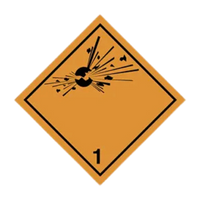
Class 1 – Explosive substances and articles
Includes products capable of exploding or causing a sudden reaction through heat, friction or impact.
- Examples: fireworks, detonators, ammunition, demolition charges.
- Risk: mass explosion or projection of fragments.
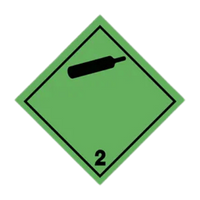
Class 2 – Gases
Compressed, liquefied, dissolved under pressure or refrigerated gases.
Subdivisions:
- 2.1: Flammable gases (propane, butane)
- 2.2: Non-flammable, non-toxic gases (nitrogen, helium)
- 2.3: Toxic gases (chlorine, ammonia)
- Risk: combustion, toxicity or internal pressure.
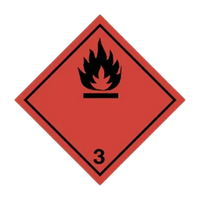
Class 3 – Flammable liquids
Liquid substances with a low flash point (generally below 60 °C).
- Examples: petrol, solvents, paints, ethanol.
- Risk: ignition by heat, spark or flame.
Class 4 – Flammable solids, spontaneously combustible and water-reactive substances
Subdivisions:
- 4.1: Flammable solids (red phosphorus, sulphur)
- 4.2: Substances liable to spontaneous combustion
- 4.3: Substances which, in contact with water, emit flammable gases
- Risk: fire caused by friction, heat or moisture.

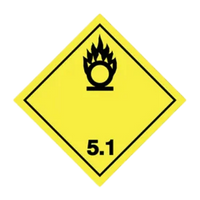
Class 5 – Oxidising substances and organic peroxides
- 5.1: Oxidising substances (nitrates, chlorates)
- 5.2: Organic peroxides (resin hardeners, catalysts)
- Risk: they promote combustion, even without a direct heat source.
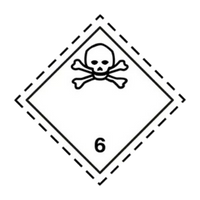
Class 6 – Toxic and infectious substances
- 6.1: Toxic substances (pesticides, cyanide, industrial chemicals)
- 6.2: Infectious substances (clinical material, medical waste)
Risk: poisoning or disease transmission.
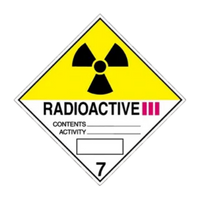
Class 7 – Radioactive material
Substances that emit ionising radiation.
- Examples: uranium, medical isotopes, laboratory materials.
- Risk: radiation exposure, contamination.
Class 8 – Corrosive substances
Substances that can destroy living tissue or damage materials.
- Examples: sulphuric acid, sodium hydroxide, industrial cleaning products.
- Risk: chemical burns, structural damage.

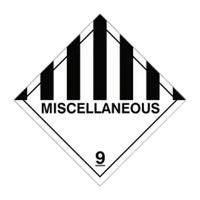
Class 9 – Miscellaneous dangerous substances and articles
Products that do not fit into the other classes but still pose a risk.
- Examples: lithium batteries, asbestos, airbags, industrial magnets.
- Risk: varied, from toxicity to flammability or environmental impact.
What if you are not sure which class your product belongs to?
Identifying the correct ADR class of a product is not always straightforward. Many industrial or chemical products contain complex mixtures or properties that require detailed analysis. A mistake can lead to delays, penalties or delivery problems.
Specialist operators such as XGL Logistics work with chemical companies, laboratories and manufacturers to review safety data sheets, advise on classification and make sure every load travels under the correct regulations.
Why is it important to know the class of your goods?
The ADR class of your goods determines:
- The type of packaging authorised
- Package labelling and vehicle placarding
- The mandatory documentation
- Driver training
- The route and transport conditions
- Loading, unloading and storage requirements
A classification error can lead to penalties, damage or even a serious accident.
→ Our dangerous goods freight forwarding service
Who is responsible for classifying the goods?
Responsibility for correctly classifying dangerous goods lies with the consignor, that is, the company that ships the goods. Classification must be based on the Safety Data Sheet (SDS) and the ADR in force.
In many cases it is advisable to work with a specialist logistics operator to avoid errors in packaging, documentation or labelling.
Understanding the classes of dangerous goods is key to safe and compliant transport. If your company handles these products, make sure you comply with the regulations and work with professionals who support you at every step.