Dangerous goods freight forwarder – XGL Logistics
XGL Logistics is a logistics operator specialising in the transport of dangerous goods by road, sea and air. We manage every shipment in strict compliance with the regulations for each mode of transport: ADR for road, IMDG for sea and DGR for air. With our own offices in Spain, Mexico, Italy and Dubai and more than 20 years of experience in complex operations, we coordinate dangerous goods shipments to any destination worldwide.
→ How we handle your dangerous goods shipments
- End-to-end multimodal management: We coordinate the transport of your dangerous goods by road, sea or air, handling documentation, UN-approved packaging and procedures adapted to each set of regulations and each destination.
- Certified ADR, IMDG and DGR operations: Our team is qualified and regularly renews its dangerous goods training to meet the quality and safety standards required for each mode of transport. We also have in-house dangerous goods safety advisers, so regulatory supervision of every shipment is handled internally.
- Worldwide coverage: We ship to any international destination, adapting each shipment to the regulations of the countries of origin and destination and to the requirements of each mode of transport.
- Licensed warehousing: Our Alicante facilities hold APQ (chemical storage), ADT (temporary storage), DA (customs warehouse) and LAME licences.
- IATA cargo agent, AESA Regulated Agent (RA) and AEO certification (AEOF): These accreditations ensure compliance in demanding air freight and customs operations.
- In-house air cargo screening: We screen your dangerous goods air shipments at our Alicante facilities, with our own equipment. More about air cargo screening.
⁄ What kind of goods do we move?
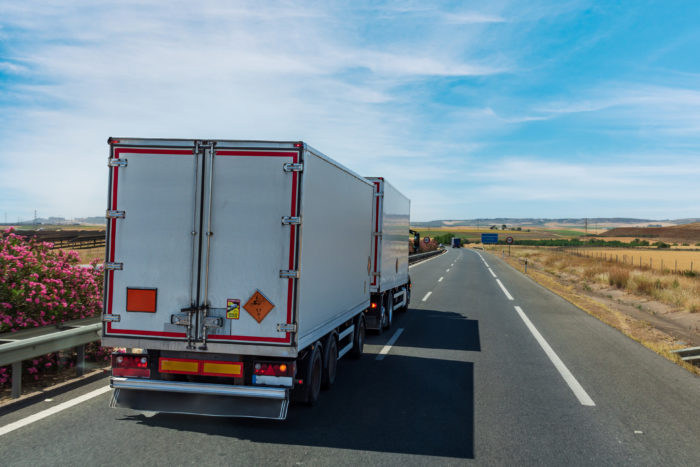
We work with companies in the chemical, food, beverage, cosmetics, automotive, pharmaceutical and metallurgical sectors that need to move hazardous products without disrupting their supply chain. We specialise in industrial cargo that requires strict compliance, full traceability and coordination between multiple carriers and customs authorities.
For the chemical industry we ship solvents, acids, paints and other classified substances. Before each shipment we review the Safety Data Sheet (SDS) and check for incompatibilities within the load. When goods need reconditioning, our Alicante facilities handle dangerous goods labelling, overpacks, decanting and repackaging.
→ Dangerous goods by air
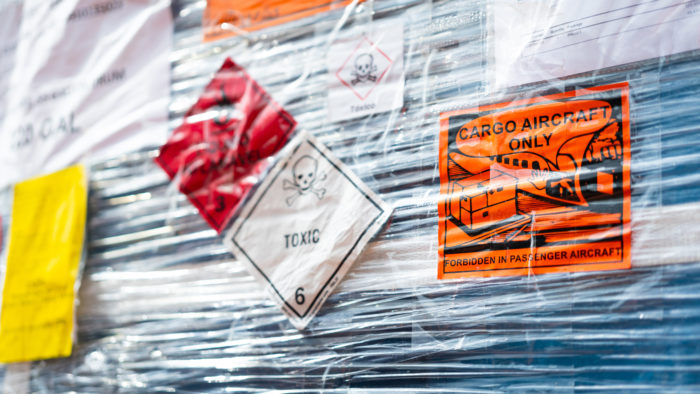
Air is the most restrictive mode for dangerous goods. The DGR limit which goods can fly, in what quantities and on which type of aircraft, and the airline checks packaging, marking, labelling and documentation before accepting the cargo. An error at any of these points means the shipment is rejected at the airport.
As an IATA cargo agent, we check every shipment before it leaves for the airport: classification, UN-approved packaging, labelling and the Shipper’s Declaration for Dangerous Goods. When the cargo passes through our Alicante facilities, we also screen it there: a security officer inspects it using the method suited to each type of goods (X-ray, explosive trace detection or visual and physical inspection) and issues the consignment security declaration. The cargo reaches the airport handling agent already screened, which speeds up acceptance.
→ Why work with us

⁄ Global coverage
We ship worldwide through our air, sea and road networks, with our own offices in Spain, Mexico, Italy and Dubai and agents in the main international markets. As members of the WCA Dangerous Goods network, part of WCA World, we work with specialist dangerous goods operators around the world.

⁄ Certification and safety
ADT, DA and LAME customs licences, AEO certification (AEOF) and in-house safety advisers ensure regulatory compliance in every operation. For air cargo, our own facilities have an X-ray scanner and explosive trace detection equipment for cargo screening.

⁄ Proven experience
More than 20 years managing complex logistics operations, including dangerous goods by all three modes: air, sea and road.

⁄ Personalised service
We tailor solutions to each client’s specific needs, with an accessible, hands-on team from first contact to delivery.
→ Certifications and memberships




→ Dangerous goods shipping: frequently asked questions
What regulations govern the transport of dangerous goods?
It depends on the mode of transport: ADR for road, IMDG for sea and DGR for air. In multimodal shipments each leg must comply with its own regulations, and we coordinate documentation and packaging so the shipment is compliant throughout.
How do I know if my goods are classed as dangerous?
The reference is the product’s Safety Data Sheet (SDS). Section 14 gives the UN number, hazard class and packing group. If you are unsure, we review it with you before quoting.
What documents do I need to ship dangerous goods?
At a minimum, the Safety Data Sheet and the transport documents required by each set of regulations, such as the Shipper’s Declaration for Dangerous Goods for air freight. On top of that come the usual commercial and customs documents. We check this documentation on every shipment and tell you what is missing.
Can dangerous goods be shipped by air?
Yes, but air is the most restrictive mode. Some goods can only travel on cargo aircraft and others are forbidden by air. As an IATA cargo agent, we handle air shipments in line with the DGR and can screen the cargo at our Alicante facilities before delivering it to the airport.
Can you store or recondition dangerous goods before shipment?
Yes. Our Alicante facilities hold APQ, ADT, DA and LAME licences. There we carry out strapping, overpacks, dangerous goods labelling, decanting, repackaging and reconditioning of loads that arrive with leaks.
Do you have a dangerous goods safety adviser?
Yes. We have in-house safety advisers who supervise the dangerous goods operations we manage, from classification of the goods to documentation.
Do you ship dangerous goods to Mexico?
Yes. We have been working on the Spain–Mexico corridor for more than 15 years and have our own office, XGL Mexico, which handles operations at destination.
What information do you need to quote a dangerous goods shipment?
The UN number or the Safety Data Sheet, weight, dimensions and type of packaging, origin and destination, mode of transport and whether the cargo is stackable.
→ Why ship your dangerous goods with XGL Logistics?
Experience and reliability in logistics
Choosing XGL Logistics means working with a logistics operator with real experience in dangerous goods across all three modes of transport — road, sea and air. This is what sets us apart:
- More than 20 years of experience managing dangerous goods logistics.
- Full regulatory compliance: ADR for road, IMDG for sea and DGR for air, adapted to the origin and destination of each shipment.
- Specialist partners: we work with approved carriers and agents in each mode, so every operation meets the technical and documentary requirements.
- End-to-end advice: we support you from classification of the goods to final delivery, including documentation, packaging and customs clearance.
Tell us what you need to move, from where and to where. We review the goods and the regulations for each leg and send you a proposal.
→ Request a quote