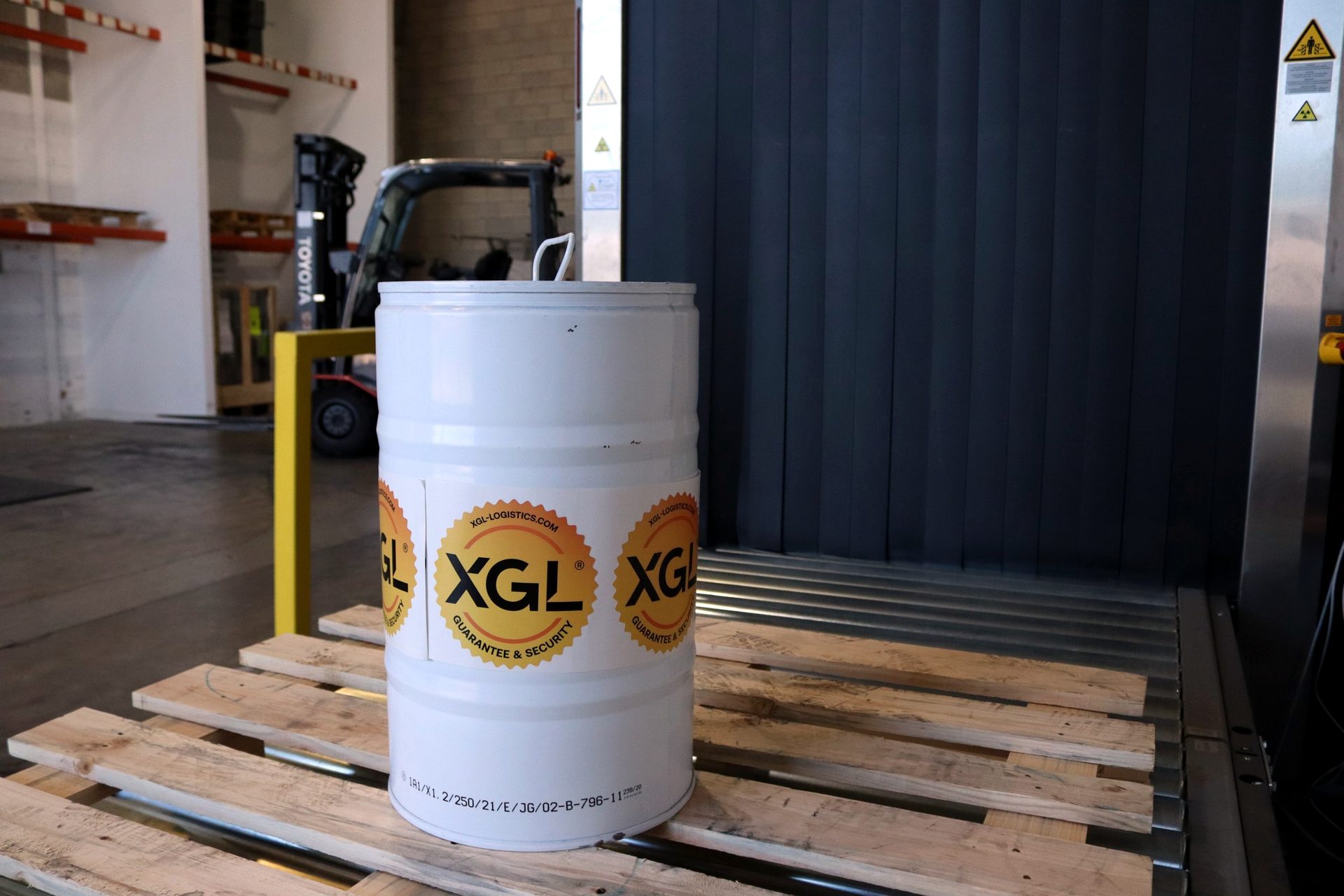
Air cargo screening
Screening air cargo means putting it through the security controls required by EU regulations so that it can be loaded onto an aircraft as secure cargo. At XGL Logistics we do this at our Alicante facilities, with our own X-ray and explosive trace detection equipment, for faster acceptance at the airport.
As an IATA cargo agent and an AESA Regulated Agent (RA), we have offered this service since August 2024. We are the first and only freight forwarder in the province of Alicante with our own screening equipment, and one of the few on Spain’s eastern coast.
→ What is air cargo screening?
EU civil aviation security regulations —Regulation (EC) 300/2008 and Implementing Regulation (EU) 2015/1998, applied in Spain through the National Security Programme (PNS)— require all cargo to be screened before loading, unless it comes from an entity in the secure supply chain that has already applied the controls: a Regulated Agent or Known Consignor.
Screening means applying those controls: inspecting the goods to rule out prohibited items, protecting them against any tampering and documenting their security status. Once the controls are passed, the shipment travels as secure cargo (SPX) and can be loaded on both passenger and cargo aircraft.
Does your company need to screen its air cargo?
If you export by air and your company is not a Known Consignor (KC), your goods are treated as unknown cargo: before flying, they must be screened by a Regulated Agent or by the airport handling agent. Known Consignor certification is voluntary and requires:
- Approval by AESA
- Appointing a security manager
- Implementing a security programme
- Passing an inspection of the premises
If your company exports by air — chemicals, footwear, toys, industrial components, food — and ships samples, spare parts or urgent orders, this applies to you. We collect the goods from your premises, you deliver them to ours, or we adapt delivery to your needs. From there, we handle the whole process up to the airport.
XGL Logistics screening service at a glance
- In-house service since: August 2024
- Where: XGL Logistics facilities in Alicante
- Methods: visual check (VCK), physical search (PHS), Dual View X-ray (XRY) and explosive trace detection (ETD)
- Maximum package size: 145 cm wide × 180 cm high
- Goods: general cargo and dangerous goods
- Accreditations: IATA cargo agent · AESA Regulated Agent (RA) · AEO certification (AEOF)
→ Benefits of screening your air cargo with XGL
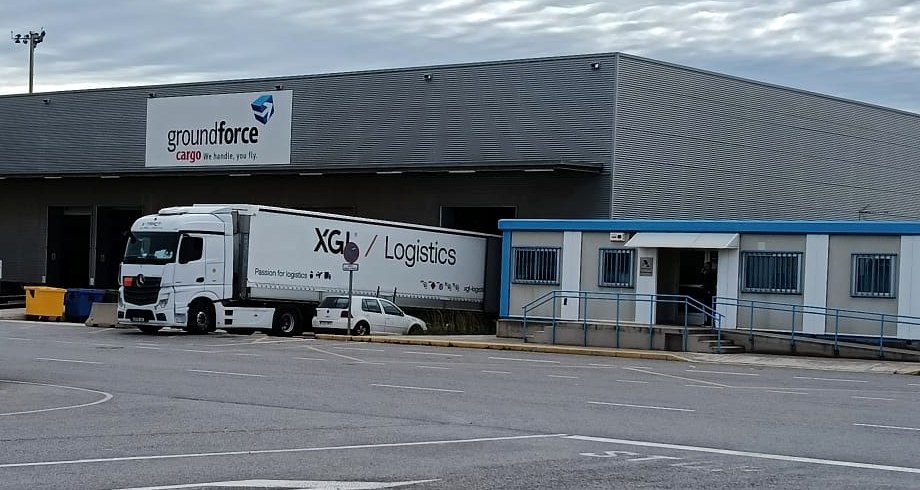
At XGL Logistics we screen cargo at our Alicante facilities and take it to the airport with our own driver and vehicle. A single point of contact for collection, preparation, screening, customs documentation and space booking with the airline.

⁄ Faster acceptance at the airport
We deliver the cargo to the airport handling agent already screened: they only need to weigh it and check it in, so acceptance is quicker.

⁄ Our own security chain to the airport
Screened cargo travels to Alicante airport with our driver and our vehicle, without leaving the secure supply chain.

⁄ Issues resolved before the airport
If a package needs repacking, reinforcing or checking, we sort it out at our facilities. This avoids goods held at the terminal and rebooked flights, with the time and cost they involve.
→ How do we screen your cargo?
Depending on the nature of the goods, the security officer applies one or more of these screening methods:
- Visual check (VCK)
- Physical search (PHS)
- X-ray scanner (XRY)
- Explosive trace detection (ETD)
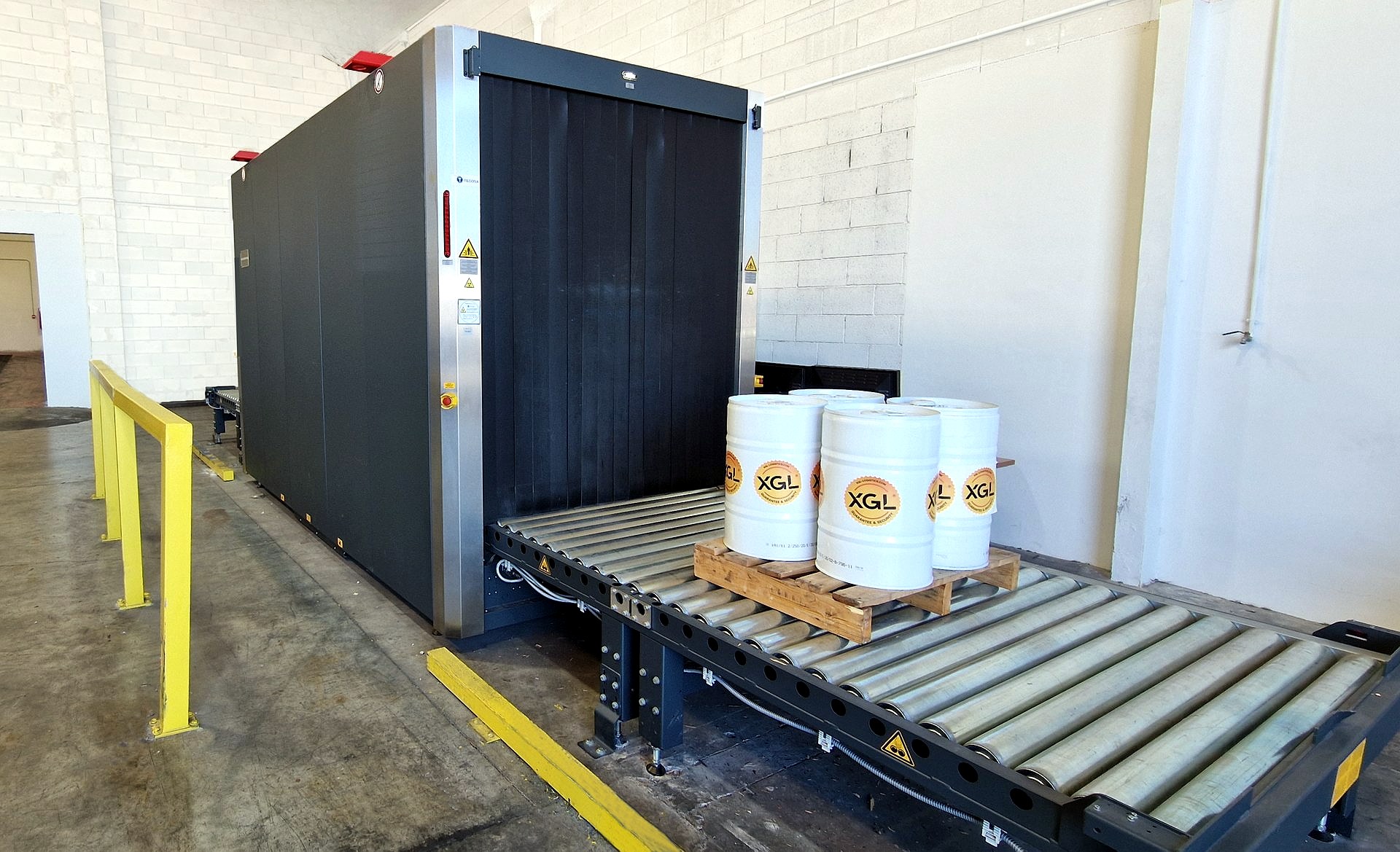
Dual View X-ray scanner (XRY)
Our Smiths Heimann HI-SCAN 145180-2is scanner uses two X-ray generators set at 90° to capture a horizontal and a vertical view of each package at the same time. This allows dense or palletised goods to be inspected reliably in a single pass.
- Tunnel for packages up to 145 cm wide and 180 cm high
- Roller conveyor for heavy cargo: up to 5,000 kg with evenly distributed weight
- Typical steel penetration of 37 mm
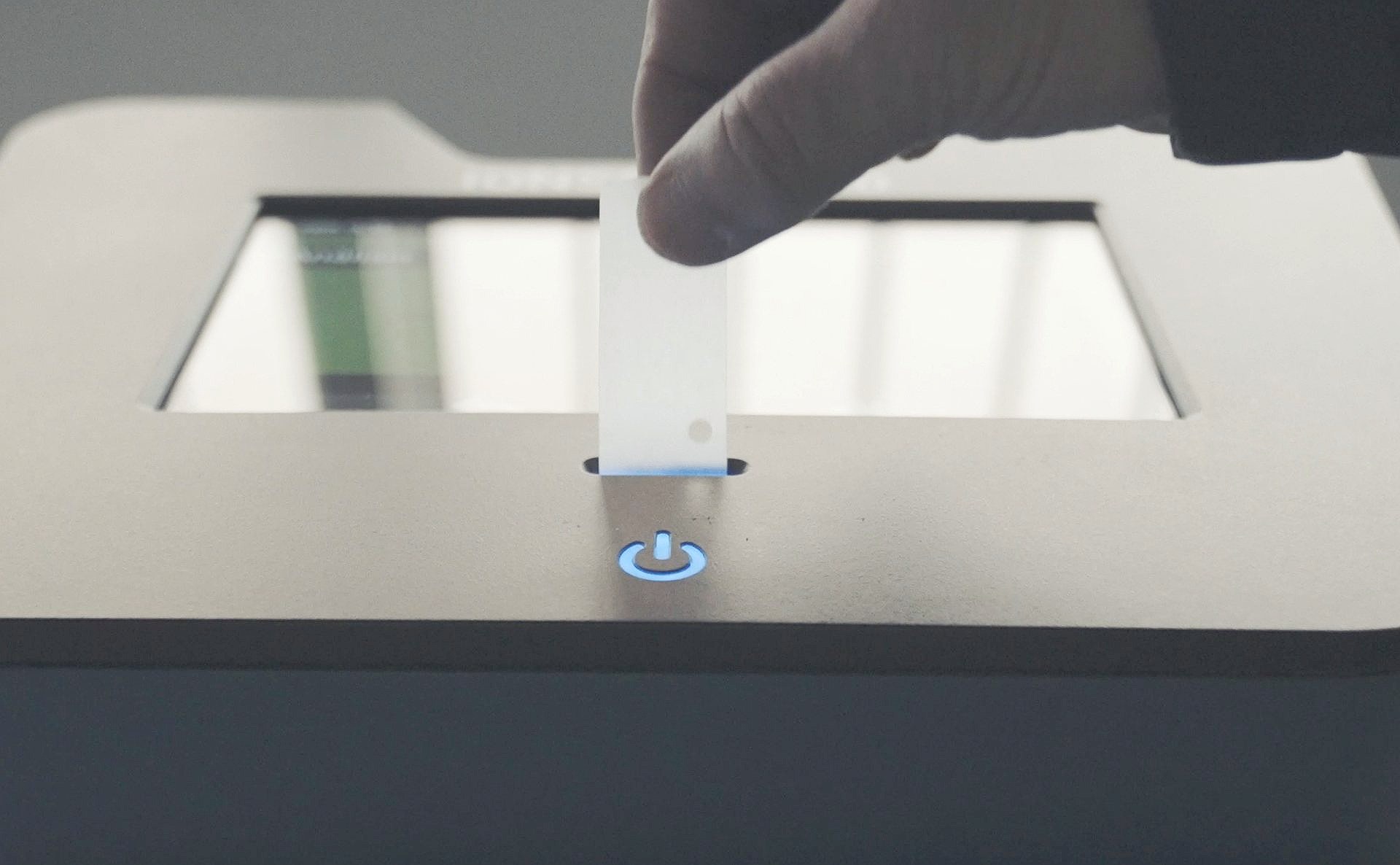
Explosive trace detection (ETD)
The Smiths Detection IONSCAN 600 analyses samples collected with single-use swabs and gives a result in 8 seconds or less. It meets the ECAC/EU standard for explosive trace detection for cargo.
If a shipment cannot be fully verified with one method, it is screened with another: cargo is only released as secure when the result is conclusive. Screening is carried out by aviation security (AVSEC) certified officers from a specialist company, always under our Regulated Agent programme.
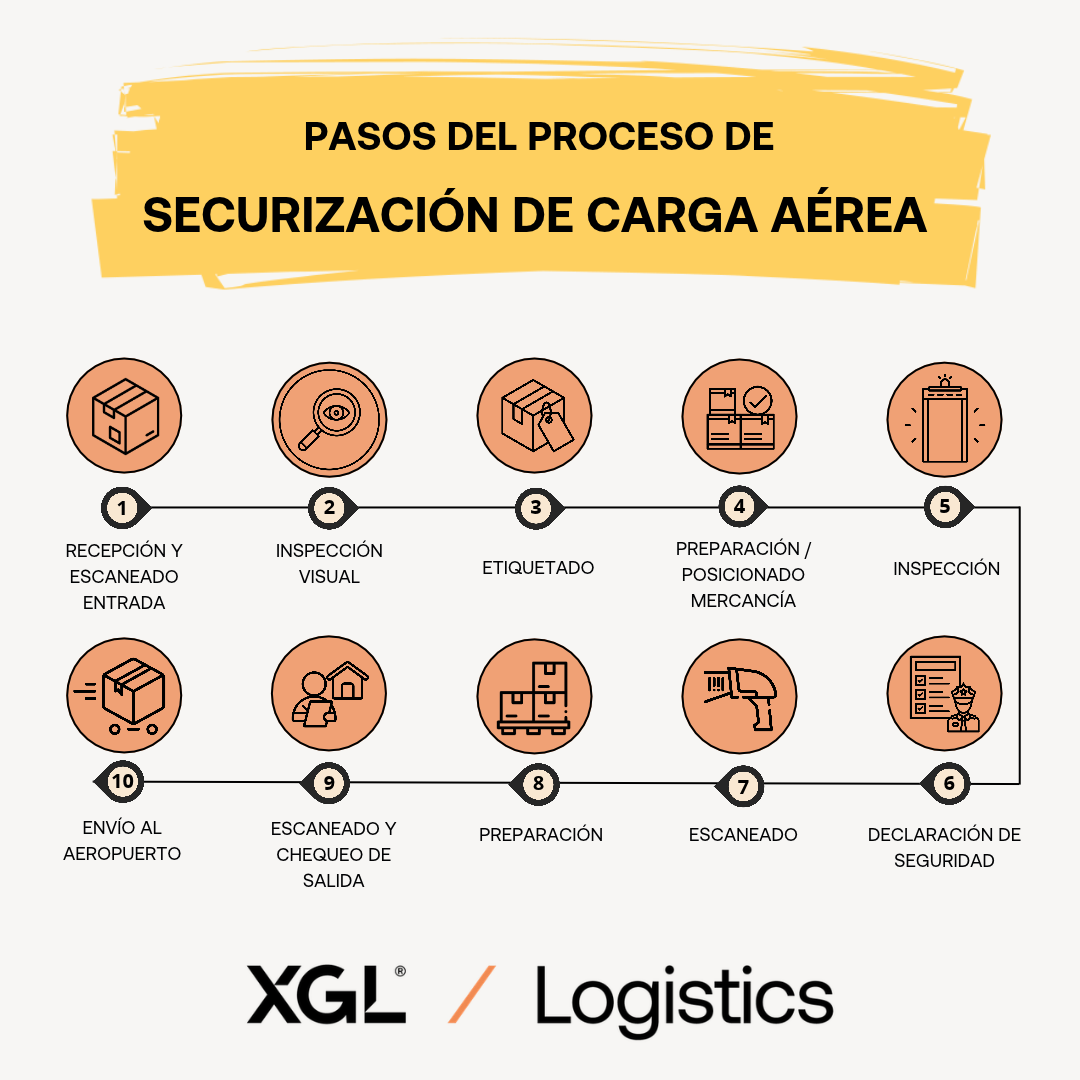
The screening process, step by step
- Reception and inbound scan: we register the shipment, check the documentation and verify the identity of the person delivering the goods.
- Visual inspection: we check the outer condition of each package and that it shows no signs of tampering.
- Labelling: we identify each package to maintain traceability throughout the process.
- Preparation and positioning: we place the goods on the conveyor to obtain a complete image of each package.
- Screening: the security officer selects the appropriate screening method for the nature of the goods.
- Security declaration: the officer issues the consignment security declaration (CSD) with our Regulated Agent code.
- Scan: we record the screened shipment in the system.
- Preparation: we protect the cargo against tampering until it leaves: strapping, sealing and palletising.
- Outbound scan and check: we make a final check of packages, labelling and documentation before loading the vehicle.
- Transport to the airport: we take the screened cargo to the departure airport without it leaving the secure supply chain.
Dangerous goods check
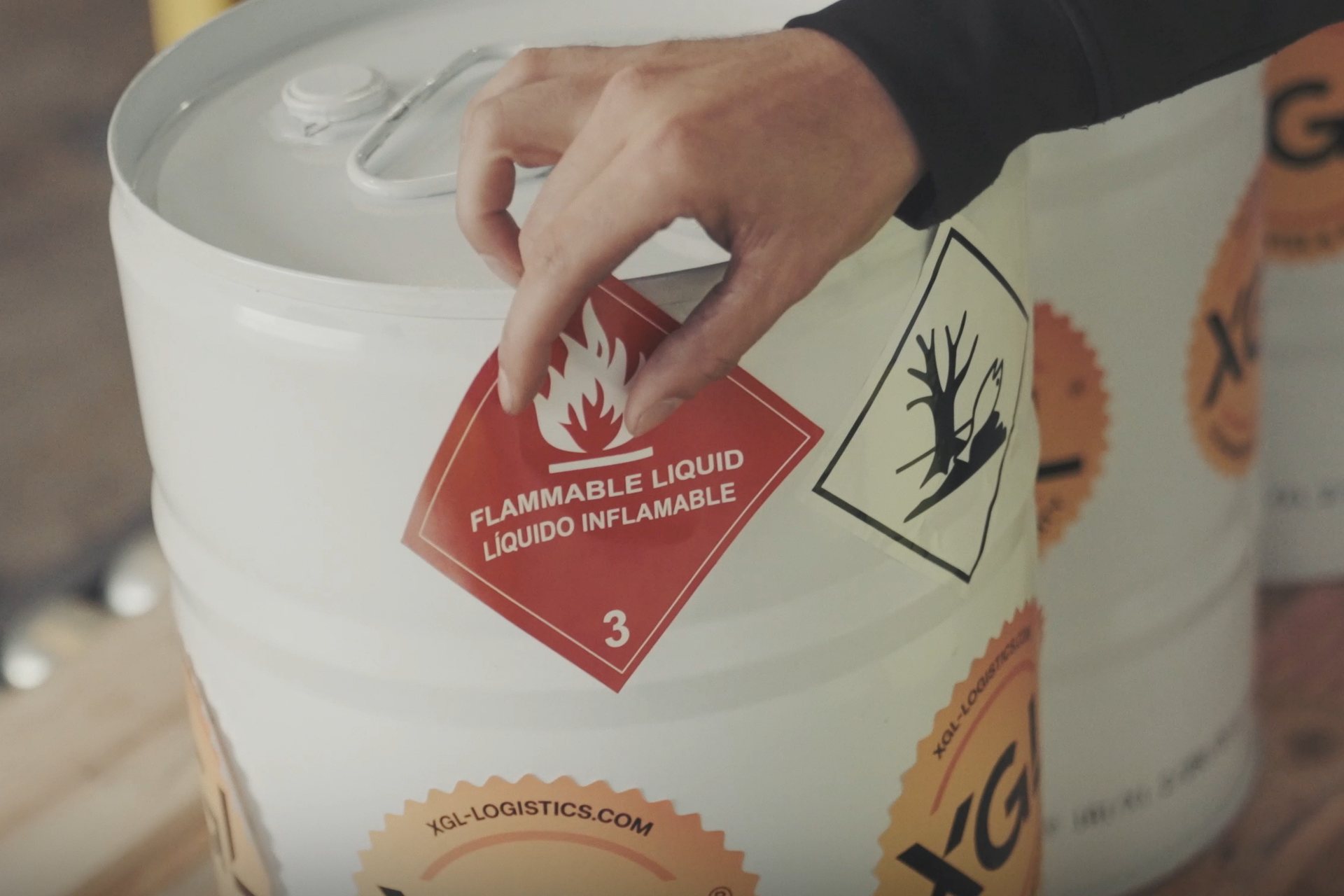
A dangerous goods shipment by air needs two separate checks, and one does not replace the other. Screening confirms that the goods pose no threat to flight security. Dangerous goods acceptance confirms that they are classified, packed, marked, labelled and documented in accordance with the DGR.
At XGL we handle both at the same facilities: screening, DGR document review, overpacks, labelling of dangerous goods, strapping and cargo preparation. Road transport to the airport complies with ADR.
→ Certifications


⁄ Regulations: Regulated Agent, Known Consignor and Approved Haulier
Air cargo security in the EU rests on three roles approved by each country’s authority, which in Spain is AESA. Each covers one link in the secure supply chain.
| Regulated Agent (RA) | Known Consignor (KC) | Approved Haulier (AH) | |
|---|---|---|---|
| What it does | Screens and secures cargo before loading | Originates secure cargo from its own premises | Carries already screened cargo by road without breaking the security chain |
| Typically | Freight forwarders and handling agents | Manufacturers and exporters | Road haulage companies |
| Mandatory? | To screen third-party cargo | No, it is voluntary | Yes, from 1 January 2027, to carry secure cargo on behalf of an RA or KC |
| Approved by | AESA | AESA | AESA |
What changes on 1 January 2027
From 1 January 2027, screened air cargo may only be carried by road within the EU by a Regulated Agent using its own resources, by a Known Consignor with its own cargo or by a haulier approved (AH) by the competent authority, under Implementing Regulation (EU) 2024/1255. The haulier declaration used until now will no longer be valid.
For exporters, this means that if secure cargo reaches the airport on transport without AH approval, the security chain is broken and the shipment must be screened again. If you screen with XGL and your cargo flies from Alicante airport, this change does not affect you: we take it from our facilities with our own driver and vehicle, without it leaving the security chain.
Air cargo screening: frequently asked questions
1. What is air cargo screening?
It is the set of security controls applied to cargo so that it can be loaded as secure cargo: inspection to rule out prohibited items, protection against tampering and documentation of its security status.
2. Is air cargo screening mandatory?
Yes. All cargo must be screened before loading, unless it comes from a Regulated Agent or Known Consignor that has already applied the controls. If your company is not a Known Consignor, your goods must be screened before flying.
3. Where does XGL Logistics screen cargo?
At our Alicante facilities, with our own equipment, or at other airports through our trusted partners.
4. What screening methods do you use?
Depending on the nature of the goods, the security officer applies one or more of these methods:
- Visual check (VCK)
- Physical search (PHS)
- X-ray scanner (XRY)
- Explosive trace detection (ETD)
5. What is the maximum package size you can screen?
Our scanner accepts packages up to 145 cm wide and 180 cm high, and up to 5,000 kg with evenly distributed weight.
6. Can you screen dangerous goods?
Yes. We screen dangerous goods and, at the same facilities, review the DGR documentation and prepare the cargo: overpacks, labelling and strapping.
7. What documents do I need to provide?
The usual shipping documents (commercial invoice and packing list) and, for dangerous goods, the Shipper’s Declaration and the Safety Data Sheet.
8. What does SPX cargo mean?
It is the security status showing that the shipment has passed the controls and can be loaded on passenger, cargo and mail aircraft.
9. Do I need to be a Known Consignor to export by air?
No. Known Consignor certification is voluntary. If you are not one, your cargo is screened through a Regulated Agent such as XGL.
10. What changes in 2027 with the Approved Haulier?
From 1 January 2027, screened cargo may only be taken to the airport by road by a Regulated Agent using its own resources, by a Known Consignor with its own cargo or by a haulier approved by the competent authority. If you screen with XGL and your cargo flies from Alicante airport, this does not affect you: we take it with our own driver and vehicle.
11. What if my cargo flies from Madrid or Barcelona?
If your cargo flies from Madrid or Barcelona, we handle that too. We can screen it at our Alicante facilities and take it, already screened, to the handling agent at the departure airport, or arrange screening with our trusted partners at that airport.
→ XGL Logistics, Regulated Agent with its own screening facilities in Alicante
Do you have an air shipment to screen?
If your next shipment goes by air, tell us what you are sending and where, and we will propose a complete solution (collection, screening at our facilities, documentation and air freight) or one tailored to your needs.

Laura Fernández
Executive Director and Air Security Manager, XGL Logistics
“By screening at our own facilities, we speed up delivery at the airport and detect issues before the cargo reaches the terminal. Minor ones we resolve here; those beyond our control we manage with the client from origin. For the client, that means less time lost and a transport chain that keeps moving.”
→ Request a quote